
Dental Implants in Dallas, TX
Dental implants in Dallas, TX offer a permanent solution for missing teeth that looks, feels, and functions like natural dentition. At the practice of Dr. R. David Brumbaugh, patients benefit from a rare advantage: both the surgical placement and the final restoration happen in one office, eliminating referrals and ensuring seamless coordination from start to finish.
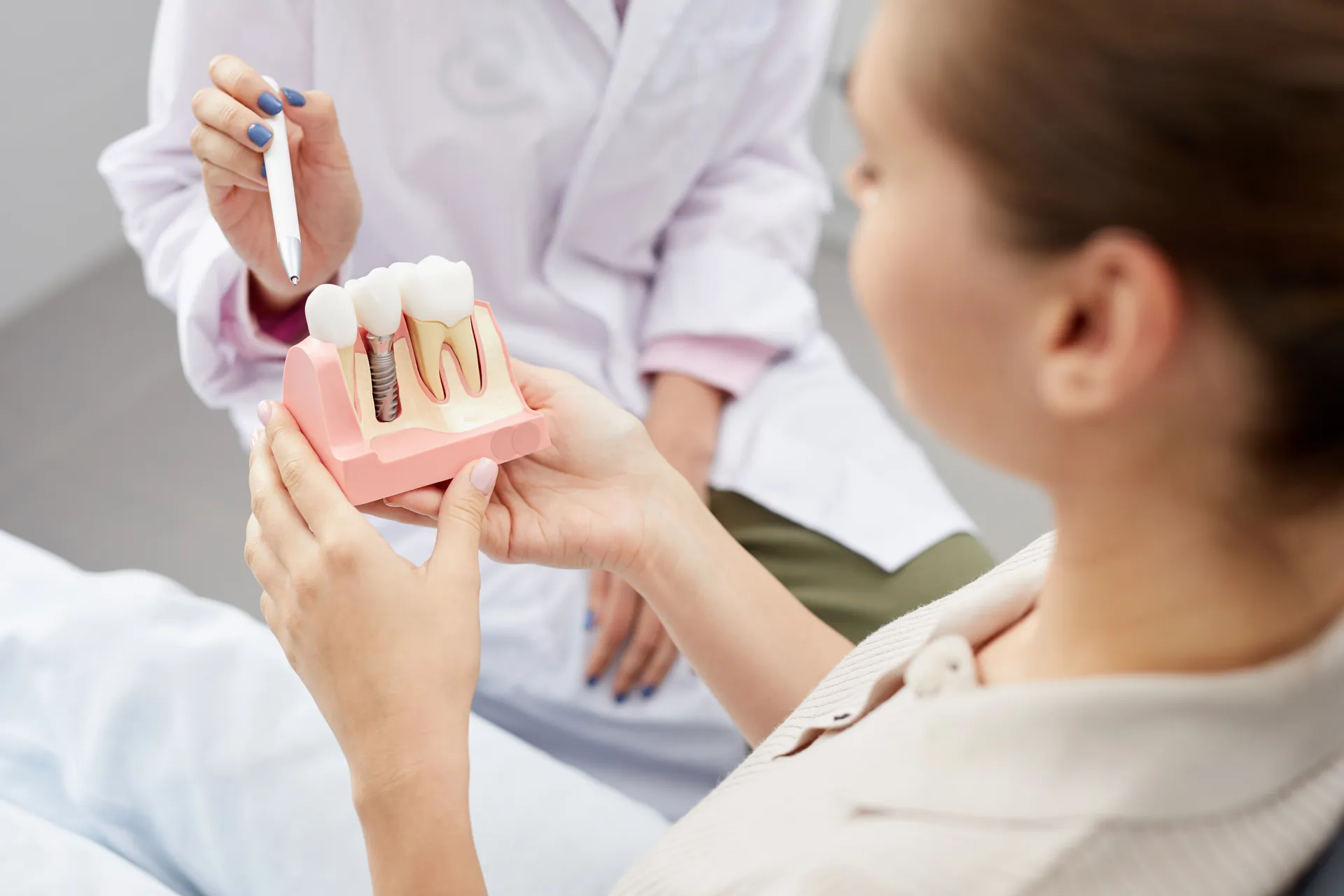
Benefits of Dental Implants

Longevity & Durability
Dental implants are made from biocompatible titanium that integrates with your natural bone structure, creating a foundation that can last a lifetime with proper care.
Enhanced Functionality
Implants restore full chewing ability, improving both the comfort and function of your smile without the limitations of dentures or bridges.
Improved Aesthetics
Custom-made crowns are placed over the implants, offering a natural look that blends seamlessly with your existing teeth.
Bone Health Preservation
Because implants bond with your bone, they help prevent bone loss which can occur with missing teeth over time.
What to Expect
Consultation & Planning
We perform a comprehensive exam with 3D imaging to assess your jawbone and create a personalized treatment plan.
Implant Placement
A titanium implant post is surgically placed into the jawbone to serve as a permanent root for your new tooth. The initial placement may take about one to two hours.
Healing & Osseointegration
Over several months, the implant fuses with your jawbone in a natural process called osseointegration. Most patients can return to normal activities within a few days.
Abutment & Restoration
Once healed, an abutment is attached and a custom-made crown is placed for a natural-looking result.
Follow-Up Care
We schedule follow-up visits to ensure your implant is healing properly and functioning as expected.
Detailed Information
A dental implant is a small titanium post placed into the jawbone where a tooth root once existed. Over several months, the implant fuses with the bone through a process called osseointegration, creating a stable foundation. Once healed, a custom abutment and crown are attached to the implant, completing the restoration with a result that mimics the strength and appearance of a natural tooth.
Most general dentists refer implant surgery to a specialist, then handle only the crown placement afterward. Dr. Brumbaugh performs both the surgical placement and the prosthetic restoration, which means:
- One team that knows your case from consultation through final restoration
- Better communication between surgical and restorative phases
- Fewer total appointments and no time lost transferring records
- IV sedation available for the surgical procedure
- CBCT and iCat 3D imaging for precision planning
Single-Tooth Implants — A single dental implant replaces one missing tooth without altering the teeth on either side. Unlike a traditional bridge, an implant stands independently, preserving your remaining tooth structure while preventing bone loss.
Multiple-Tooth Implants — When two or more adjacent teeth are missing, implants can support an implant-supported bridge. Two implants can often support three or four connected crowns, reducing the total number of surgical sites while restoring full function.
Full-Arch Restoration — Patients missing all or most teeth in an arch have several implant-supported options. All-on-4 implants use four strategically angled posts to support an entire arch of fixed teeth. Implant-supported dentures provide a removable option that snaps onto implant attachments for dramatically improved stability.
Adequate jawbone volume is essential for implant stability. When bone has been lost due to prolonged tooth absence, periodontal disease, or trauma, bone grafting can rebuild the site. Dr. Brumbaugh places bone graft material at the extraction site or deficient area, allowing new bone to grow over several months. Socket preservation grafting at the time of extraction maintains bone volume for future implant placement. In the upper jaw, a sinus lift procedure may be necessary to create sufficient bone height beneath the sinus cavity.
Most adults with adequate bone density and good general health are candidates. Patients who have experienced bone loss may still qualify with bone grafting procedures. Conditions such as uncontrolled diabetes, active periodontal disease, or heavy smoking can affect healing and may need to be addressed before implant placement. During your consultation, Dr. Brumbaugh reviews your 3D imaging and discusses whether implants, a dental bridge, or another option is the right fit for your situation.
Dental implants do not develop cavities, but the gum tissue and bone around them still require diligent care. Brush twice daily, floss around the implant restoration using implant-specific floss or a water flosser, and keep up with regular professional cleanings at our office. Dr. Brumbaugh monitors your implant at each visit with digital imaging to ensure the bone integration remains healthy and the restoration fits properly over time.
Implant costs depend on the number of implants placed, whether bone grafting is needed, and the type of final restoration. A single implant with abutment and crown is a different investment than a full-arch All-on-4 case. We provide a detailed, itemized estimate during your consultation so you understand the investment before committing. Our office accepts most PPO dental insurance plans and offers financing through CareCredit and Cherry to help make treatment accessible.
Frequently Asked Questions
The cost of a single dental implant (including the post, abutment, and crown) varies based on complexity and materials. During your complimentary consultation, we provide a personalized estimate based on your specific needs. Financing options are available to spread the cost over time.
For most patients, implants offer the closest replica of natural teeth in terms of function, aesthetics, and longevity. Unlike bridges, implants do not require altering adjacent healthy teeth. Unlike dentures, they do not slip or require adhesives. With proper care, implants can last a lifetime.
The titanium implant post itself can last a lifetime with proper oral hygiene and regular dental visits. The crown or restoration on top may need replacement after 10 to 15 years due to normal wear, similar to any dental restoration.
Most patients report less discomfort than expected. Local anesthesia numbs the area completely, and IV sedation is available for those who prefer a deeper level of relaxation. Post-operative discomfort is typically managed with over-the-counter medications for a few days.
Some PPO dental plans provide partial coverage for implant procedures. Medical insurance may also contribute if the implant is needed due to trauma or medical necessity. Our team reviews your benefits and maximizes your coverage.
Complimentary Implant Consultation
Find out if dental implants are right for you. Call 214-369-5159 or request your consultation online. No cost, no obligation.