
Advanced Dental Technology in Dallas, TX
Technology should solve real clinical problems, not just impress on a brochure. At the practice of Dr. R. David Brumbaugh, every piece of dental technology in our Dallas, TX office earns its place by improving diagnostic accuracy, treatment precision, patient comfort, or visit efficiency. Our Highland Park-area patients benefit from a full suite of advanced systems that is uncommon in a single private practice.
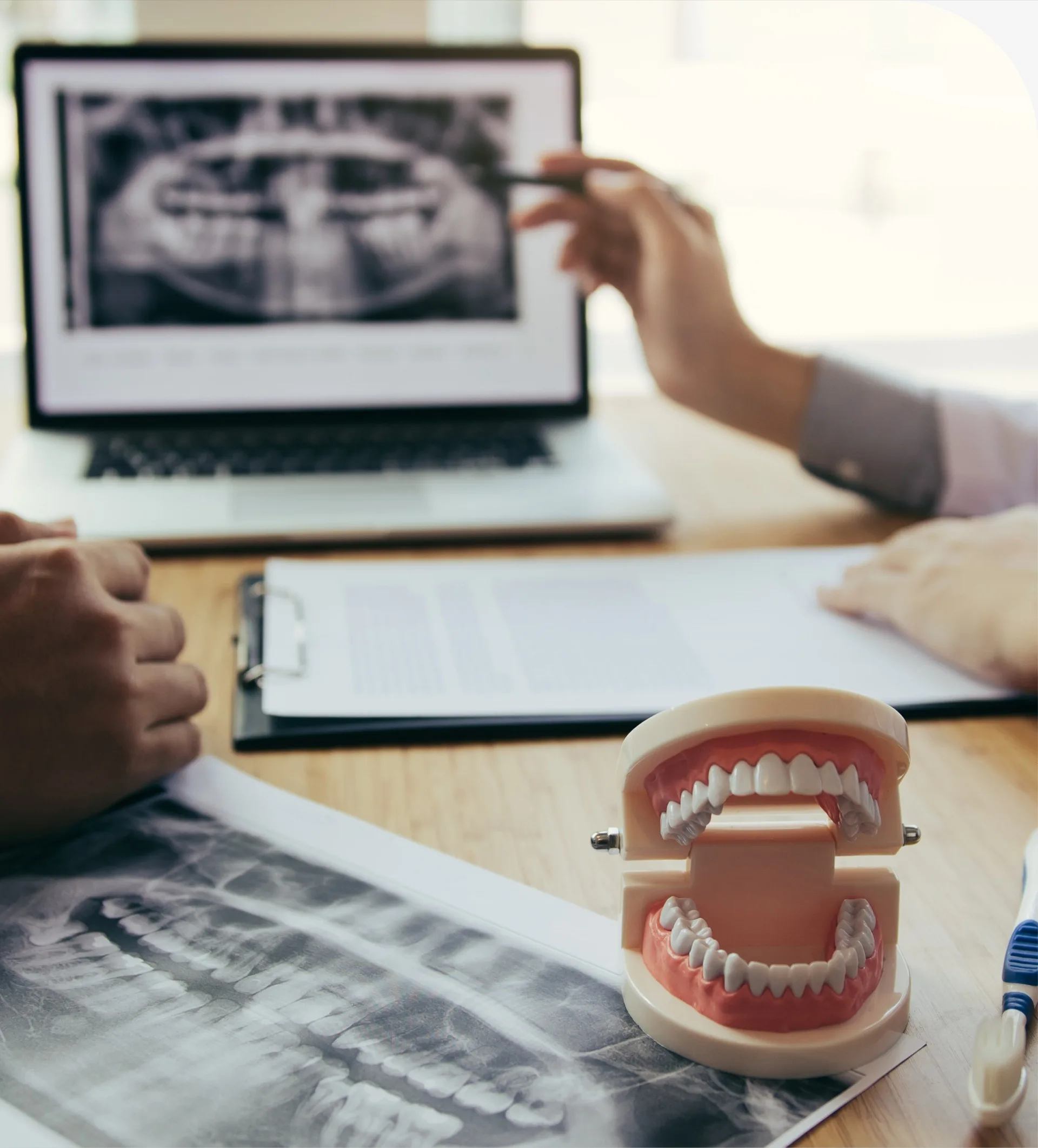
CBCT and iCat 3D Imaging
Cone beam computed tomography (CBCT) captures three-dimensional images of your teeth, jawbone, sinuses, nerve pathways, and surrounding structures in a single low-dose scan. Unlike traditional two-dimensional X-rays, 3D imaging reveals hidden infections, measures bone density for implant planning, maps root canal anatomy, and identifies fractures that would otherwise go undetected.
Our office uses both CBCT and iCat imaging systems, giving Dr. Brumbaugh the flexibility to select the optimal scan for each clinical situation.
CEREC Same-Day Restorations
CEREC (Chairside Economical Restoration of Esthetic Ceramics) allows us to design and mill custom ceramic crowns, inlays, and onlays during a single appointment. The system eliminates the need for messy impressions, temporary restorations, and return visits. Patients leave with a permanent, precisely fitted same-day crown in roughly 90 minutes.
Primescan Digital Impressions
Primescan replaces traditional putty impressions with a compact handheld scanner that captures detailed 3D images of your teeth in seconds. The experience is faster, more comfortable, and more accurate. Digital impressions are used for crowns, veneers, bridges, aligners, and implant restorations. No gagging, no trays, no waiting for material to set.
Laser Dentistry
Soft-tissue dental lasers allow Dr. Brumbaugh to perform gum contouring, treat periodontal pockets, and manage soft-tissue lesions with precision that traditional instruments cannot match. Laser procedures typically involve less bleeding, less swelling, and faster healing compared to conventional methods.
Intraoral Cameras
Our intraoral cameras capture high-resolution images of individual teeth and soft tissues, displayed on a chairside monitor in real time. These images allow Dr. Brumbaugh to show you exactly what he sees: a hairline crack in a molar, early decay along a filling margin, or inflammation along the gum line. Visual evidence makes it easier to understand why a particular treatment is recommended and gives you confidence in the decisions you make about your care.
Intraoral images also serve as baseline documentation. By comparing images from visit to visit, we can track changes over time and intervene early when conditions begin to develop.
Integrated Digital Workflow
Our technology does not operate in silos. CBCT imaging feeds directly into digital implant planning software. Primescan data flows into CEREC for same-day restoration design and milling. This integrated workflow means fewer manual handoffs, reduced room for error, and faster turnaround on complex treatments like implant placement, same-day crowns, and full-mouth reconstruction.
For patients, the practical benefit is straightforward: more can be accomplished in fewer visits, with higher precision and less discomfort. A crown that once required two appointments with a temporary restoration can now be completed in one. An implant case that once demanded referrals to multiple offices stays in one practice with one coordinated digital plan.
How Technology Improves Patient Comfort
Many patients associate dental visits with discomfort, largely because of outdated techniques. Digital impressions eliminate the gagging and mess of putty trays. Laser procedures reduce bleeding and post-operative soreness compared to traditional scalpel techniques. 3D imaging captures a full diagnostic scan in seconds rather than requiring multiple film-based X-rays. Combined with IV sedation for patients who experience anxiety, our technology-forward approach makes dental care more comfortable than most patients expect.
How Technology Benefits Your Care
- Earlier, more accurate diagnoses through 3D imaging
- Fewer appointments thanks to same-day restorations
- More comfortable impressions without putty trays
- Precise implant placement guided by digital surgical plans
- Faster healing from laser-assisted soft-tissue procedures
- Better communication as you see your own images on a chairside monitor
Frequently Asked Questions
CBCT (cone beam computed tomography) is a specialized imaging system that produces three-dimensional views of the teeth, bone, and soft tissues. It is used for implant planning, diagnosing infections, evaluating wisdom teeth, and mapping complex root canal anatomy.
Yes. CBCT uses significantly less radiation than a medical CT scan and captures images in seconds. The diagnostic benefit far outweighs the minimal radiation exposure. We follow ALARA (As Low As Reasonably Achievable) principles and take scans only when clinically indicated.
In our office, laser dentistry is primarily used for soft-tissue procedures: gum contouring, periodontal pocket treatment, frenectomies, and managing oral lesions. Lasers provide precision cutting with less discomfort and faster healing.
Digital impressions use a handheld scanner (Primescan in our office) to capture a 3D map of your teeth and gums. They replace the traditional putty-filled trays that many patients find uncomfortable. The digital data is more accurate and can be transmitted instantly for restoration design.
After scanning your prepared tooth with Primescan, CEREC software designs a custom restoration on-screen. A milling unit then carves the crown or inlay from a solid block of dental ceramic in about 15 minutes. Dr. Brumbaugh adjusts the fit, polishes the surface, and bonds it in place the same visit.
Experience Technology-Driven Care
See our technology in action at your next appointment. Call 214-369-5159 or request an appointment online.